
Rotary Unions for the Textile Industry: Manufacturer & Exporter in India
Fabric only comes out right when every cylinder it touches is at the right temperature. In a textile processing house, that means steam-heated drying cylinders, calender bowls on thermal oil, and cooling cylinders on water. Each of these is a rotating drum, and each depends on a rotary union to bring the heating or cooling medium in.
Roto Flow Technologies India Private Limited manufactures and exports mono flow and dual flow rotary unions and rotary joints from Gujarat, India. This page covers where rotary unions are used in textile processing, which products suit each machine, and what to check when you order. It is part of our range of industries we serve.
Tell us your medium, temperature, pressure and cylinder speed and we will recommend a union for your machine. Request a quote.
Why Rotary Unions Matter in Textile Processing
Uniform heat across the cylinder is what gives uniform drying, finish and hand-feel across the fabric. If a drying cylinder is flooded with condensate or a calender bowl runs at the wrong temperature, the result shows up as uneven moisture, shade variation or poor finish.
Leaks matter more in textiles than in most industries because a drip of water or oil can stain the cloth running past. Textile plants are also humid and often lint-filled, with frequent speed changes and start-stops. All of this puts extra demands on seals, bearings and housing materials.
A union that matches the medium, temperature and speed of the machine, and is properly supported, helps protect fabric quality as well as uptime.
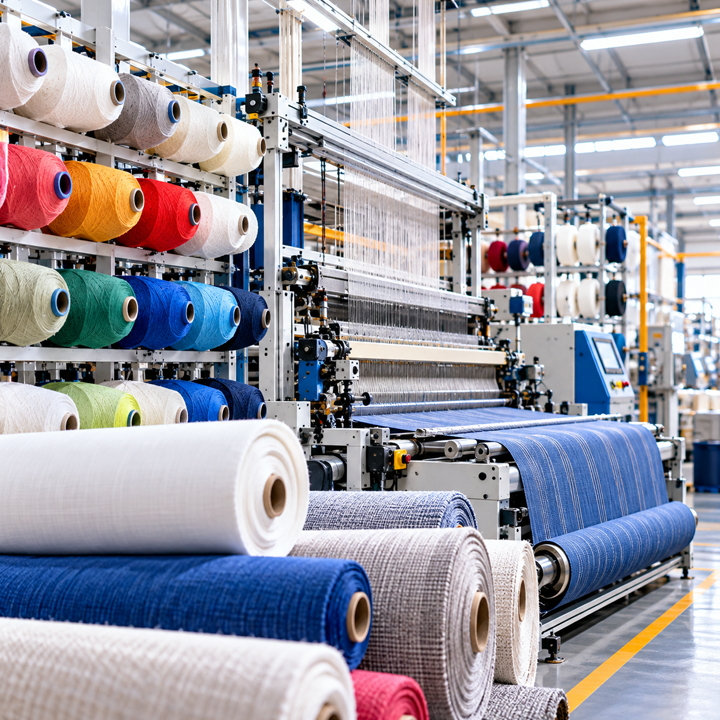
Where Rotary Unions Are Used in Textile Machinery
The table below lists the main textile machines that use rotary unions and the Roto-Flow products usually specified. Final selection depends on your machine and operating conditions, so share your details and we will confirm the best fit.
| Machine / position | Typical media | Suitable Roto-Flow solution |
|---|---|---|
| Drying cylinders (can dryers) | Steam and condensate | |
| Sizing and slasher machine cylinders | Steam | |
| Calenders and heated bowls | Hot oil, thermic fluid or steam |
Hot oil rotary joints, thermic fluid rotary joints or steam rotary joints |
| Compressive shrinkage (sanforising) cylinders | Steam | |
| Fabric coating and lamination rolls | Hot oil or water | |
| Nonwoven thermal bonding rolls | Hot oil or thermic fluid | |
| Cooling cylinders after heat treatment | Water | |
| Rolls with separate heating and cooling zones | Two or more media |
For wider industry background, see the Ministry of Textiles and the Textile Institute.
Our Rotary Union Range for Textile Machinery
Steam Rotary Joints for Drying and Sizing Cylinders
Most textile drying runs on steam. Our steam rotary joints connect the fixed steam line to the rotating cylinder and, with a suitable siphon arrangement, allow condensate to be removed. Read how a rotary steam joint works and see the key applications of steam rotary joints.
Hot Oil and Thermic Fluid Joints for Calenders and Coating Rolls
Where finishing needs higher or tighter temperature control, thermal oil is used. Our hot oil rotary joints and thermic fluid rotary joints are built for this duty. Our guide on what to know about hot oil applications is a useful starting point.
Water Rotary Unions for Cooling Cylinders
Cooling cylinders use water, and our water rotary unions work with clean, dirty, cold and hot water. Stainless steel housing and rotor options suit humid, wet plant conditions.
High Temperature and Multi-Passage Unions
For hotter media, see our high temperature rotary joints. Where a roll needs several media or separate zones, multi passage rotary unions carry them through one unit.
Water Rotary Union Specifications
The table below shows the operating range of our water rotary unions. For steam, hot oil and thermic fluid duty, ask us for the range that matches your pressure and temperature.
| Feature | Roto-Flow rotary joints and unions |
|---|---|
| Designs | Mono flow (threaded end rotor) and dual flow (flange end rotor) |
| Rotor size | 3/8" to 2" (DN 10 to DN 50) |
| Pressure | Up to 25 bar (363 PSI) |
| Temperature | Up to +120 °C (+248 °F) |
| Speed | Up to 3000 RPM |
| Rotary and seat faces | Carbon, silicon carbide, tungsten carbide, ceramic (99.5%), bronze, GFT |
| Secondary seals | FKM, Aflas, NBR, EPDM |
| Housing, rotor and other parts | Cast iron, SS 304, SS 316, brass |
Mono Flow or Dual Flow: Which Do You Need?
| Mono flow | Dual flow | |
|---|---|---|
| Passages | One | Two |
| Best when | The medium passes through the roll in one direction | Supply and return both connect through the same union |
| Typical textile use | Simple cooling cylinders | Cylinders needing supply and return on one journal |
If you are not sure, send us a photo or drawing of the cylinder journal and we will advise.
How to Choose the Right Rotary Union for Textile Machinery
Work through these points before you order, or send them to us and we will do the matching:
- Medium: steam, hot oil, thermic fluid or water.
- Temperature and pressure: the maximum values in running and at start-up.
- Condensate removal: on steam duty, how condensate leaves the cylinder and the siphon type fitted.
- Cylinder speed: the RPM at full production speed, including how often the machine starts and stops.
- Materials: stainless steel parts for humid or wet areas, and seal materials suited to the medium.
- Connections: rotor end type, housing connection size and position.
- Replacement or new: if replacing, send the existing make, model and a photo or drawing.
Our guide on how to choose the right rotary joint for your needs covers these points in more detail.
Common Rotary Union Problems in Textile Plants and How to Avoid Them
Leaks that stain fabric
a dripping union can mark the cloth. Fit and maintain the union correctly and replace worn seals before they leak.
Flooded cylinders:
poor condensate removal causes uneven drying. Check the siphon and drainage.
Lint and humidity:
these speed up wear and corrosion. Keep the area clean and choose suitable materials.
Stress from frequent start-stops:
repeated heating and cooling cycles wear seals. Choose seal faces and elastomers rated for your conditions.
Pipe or hose load:
pulling on the union wears its bearings. Support the lines independently.
Why Textile Processors Choose Roto-Flow
-
Direct manufacturer in Gujarat: we make, supply and export our own rotary unions and rotary joints, close to major textile processing regions.
-
Range for textile duty: steam, hot oil, thermic fluid, water, high temperature and multi-passage from one supplier.
-
Stainless steel options: SS 304 and SS 316 housing and rotor materials are available.
-
Replacement for imported unions: our rotary unions are designed to be equivalent and replaceable with leading international makes. Share your existing model or drawing and we will match it.
-
Quality-checked products: see our certificates.
-
Domestic supply and export: learn more about us as rotary unions manufacturers in India. We also serve the paper industry, rubber industry and plastic industry with related ranges.
Frequently Asked Questions
Steam rotary joints are used on drying cylinders. They supply steam to the rotating cylinder and, with a suitable siphon system, help remove condensate. Send us your pressure, temperature and journal size for a recommendation.
That depends on how your calender is heated. Both are used, and we supply steam, hot oil and thermic fluid rotary joints. Tell us the medium and operating temperature and we will recommend the right model.
Yes. Drips of water or oil near the running cloth can leave marks. Replace worn seals early, check the union during routine maintenance and keep supply lines supported so the union is not stressed.
Yes. Our housing and rotor parts are available in SS 304 and SS 316 as well as cast iron and brass. Tell us the conditions and we will advise on materials.
A mono flow union has one passage. A dual flow union has two, so supply and return can pass through the same unit.
Yes. Our rotary unions are designed to be equivalent and replaceable with leading international brands. Send us the model number, a photo or a drawing, and we will match it.
Yes. We supply customers across India and export rotary unions and rotary joints overseas. Contact us with your requirement and destination.
Request a Quote for Your Textile Machinery
Whether you are replacing a union on a drying cylinder or specifying one for a new machine, send us the details below and our team will respond with a recommendation and quotation:
- Machine and cylinder or roll application
- Medium (steam, hot oil, thermic fluid or water)
- Operating temperature, pressure and RPM
- Journal size, connection type and siphon arrangement
- Existing union make and model, if you are replacing one
Get in touch with Roto-Flow today and keep your textile line running.
Request a Quote