
Rotary Unions for the Rubber Industry: Manufacturer & Exporter in India
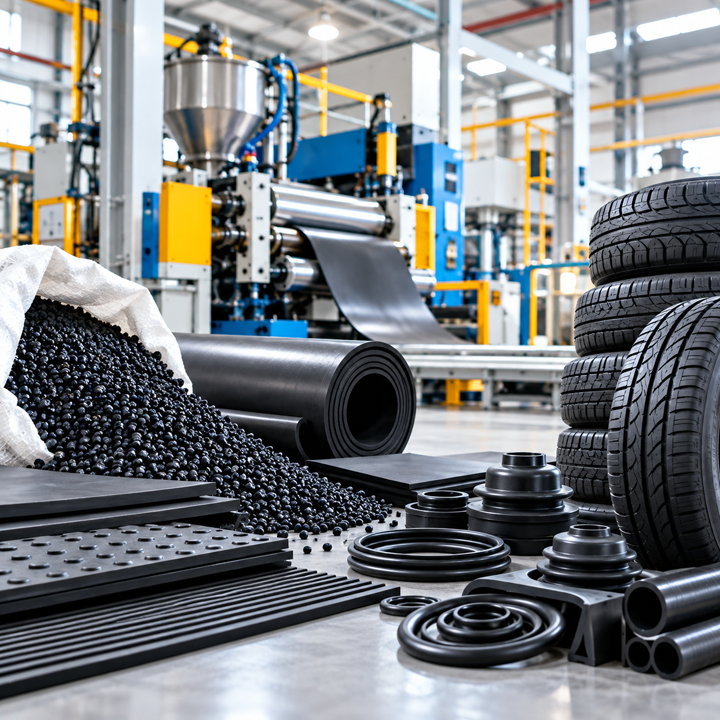
Rubber processing is hard on equipment. Mixing mills run under heavy load, calenders work with steam or hot oil, and vulcanising drums operate at elevated temperature and pressure for long hours. Every one of these machines relies on a rotary union to move water, steam or thermal oil into a roll or drum while it turns.
Roto Flow Technologies India Private Limited manufactures and exports mono flow and dual flow rotary unions and rotary joints from Gujarat, India. This page explains where rotary unions are used in rubber manufacturing, which products suit each application, and how to choose the right one for your machine. It is part of our wider range of industries we serve.
Share your media, temperature, pressure and RPM and we will recommend a union for your rubber line. Request a quote.
Why Rotary Unions Matter in Rubber Manufacturing
Rubber compounds are very sensitive to temperature. If a mixing mill runs too hot, the compound can begin to cure early and become unusable. If a calender roll is uneven in temperature, the sheet comes out with variable thickness. If a vulcanising drum loses steam, cure becomes inconsistent and scrap rises. In each case, the roll temperature is controlled through the rotary union.
Rubber machinery also puts extra demands on these components. Rolls are heavy, loads on the journal are high, and duty is often continuous. Steam lines carry condensate that must be removed, and cooling water in many plants is far from clean. A union that is not matched to these conditions will leak early and cause unplanned stoppages.
Choosing the right rotary union, and keeping it supported and maintained, is one of the simplest ways to protect uptime and compound quality on a rubber line.
Where Rotary Unions Are Used in Rubber Processing
The table below lists the main rubber machines that use rotary unions and the Roto-Flow products usually specified for them. Final selection depends on your operating conditions, so send us your details and we will confirm the best fit.
| Machine / position | Typical media | Suitable Roto-Flow solution |
|---|---|---|
| Two-roll mixing mills | Cooling water | |
| Calenders for sheeting and skim coating | Steam, hot oil or water |
Steam rotary joints, hot oil rotary joints or water rotary unions |
| Rotary vulcanising drums | Steam | |
| Heated drums on belt and sheet lines | Hot oil or thermic fluid | |
| Extruder and screw cooling | Water | |
| Cooling drums after mixing | Water | |
| Hot process equipment | Hot media | |
| Rolls with separate heating and cooling zones | Two or more media |
For wider industry background, see the Rubber Board of India and the International Rubber Study Group.
Our Rotary Union Range for Rubber Machinery
Steam Rotary Joints for Calenders and Vulcanising Drums
Steam is the most common heating medium on rubber calenders and drum vulcanisers. Our steam rotary joints provide a reliable seal between the fixed steam line and the rotating roll, and handle condensate return when specified correctly. Our guides on how steam rotary joints work and how to choose the right steam rotary union explain the points to check.
Hot Oil and Thermic Fluid Rotary Joints
Where a calender or drum is heated with thermal oil, our hot oil rotary joints and thermic fluid rotary joints are built for the higher temperatures involved. Hot oil joints also need regular care, so read why hot oil rotary union maintenance is essential.
Water Rotary Unions for Mixing Mills and Cooling Rolls
Mixing mill rolls and cooling drums are cooled with water that is often untreated. Our water rotary unions work with clean, dirty, cold, hot and abrasive water, and our mono flow and dual flow designs are easy to install and repair on site.
High Pressure and High Temperature Rotary Joints
For duties with higher line pressure or hotter media, our high pressure rotary joints and high temperature rotary joints are available. See our guide to high pressure rotary unions for background.
Multi-Passage Rotary Unions
Where a roll needs separate heating and cooling circuits, multi passage rotary unions carry several media through a single unit and save space on the roll journal.
Water Rotary Union Specifications
The table below shows the operating range of our water rotary unions, which are the units most often used on mixing mills and cooling rolls. For steam, hot oil and thermic fluid duty, ask us for the range that matches your pressure and temperature.
| Feature | Roto-Flow rotary joints and unions |
|---|---|
| Designs | Mono flow (threaded end rotor) and dual flow (flange end rotor) |
| Rotor size | 3/8" to 2" (DN 10 to DN 50) |
| Pressure | Up to 25 bar (363 PSI) |
| Temperature | Up to +120 °C (+248 °F) |
| Speed | Up to 3000 RPM |
| Rotary and seat faces | Carbon, silicon carbide, tungsten carbide, ceramic (99.5%), bronze, GFT |
| Secondary seals | FKM, Aflas, NBR, EPDM |
| Housing, rotor and other parts | Cast iron, SS 304, SS 316, brass |
| Rotor end connections | Threaded, quick connect or flange |
How to Choose the Right Rotary Union for Rubber Machinery
Before you order, work through these points, or send them to us and we will do the matching for you:
- Heating or cooling medium: water, steam, hot oil or thermic fluid, and the quality of the water if cooling.
- Temperature and pressure: the maximum values reached in operation, including start-up.
- Condensate handling: on steam duty, how condensate leaves the roll, since this affects the design you need.
- Roll size and weight: heavy rolls load the journal, so the union must be properly supported and not carry any hose weight.
- Speed: the roll RPM in normal running.
- Mono flow or dual flow: supply only, or supply and return through one union.
- Connections: rotor end type, housing connection size and position.
Our guide on how to choose the right rotary joint for your needs covers these points in more detail.
Common Rotary Union Problems on Rubber Lines and How to Avoid Them
Leakage after thermal cycling
repeated heating and cooling stresses seals. Choose seal faces and elastomers rated for your peak temperature.
Seal wear from dirty cooling water
abrasive particles shorten seal life. Filter the supply before the union.
Condensate and water hammer on steam duty
poor condensate removal can damage the joint. Make sure the system is designed to drain properly.
Hose load on the union
heavy or poorly supported hoses pull on the union and wear the bearings. Support the lines independently.
Dry running
running without media damages the seal faces quickly. Establish flow before the roll turns.
Why Rubber Processors Choose Roto-Flow
-
Direct manufacturer in Gujarat: we make, supply and export our own rotary unions and rotary joints.
-
Range for rubber duty: steam, hot oil, thermic fluid, water, high pressure and multi-passage unions from one supplier.
-
Easy to install and repair: self-supported designs that your maintenance team can service.
-
Replacement for imported unions: our rotary unions are designed to be equivalent and replaceable with leading international makes. Share your existing model or drawing and we will match it.
-
Quality-checked products: see our certificates.
-
Domestic supply and export: learn more about us as rotary unions manufacturers in India. Our work for the plastic industry uses many of the same product ranges.
Frequently Asked Questions
It depends on how the calender is heated or cooled. Steam rotary joints, hot oil rotary joints and water rotary unions are all used. Send us the medium, temperature and pressure and we will recommend the right model.
Yes. Steam rotary joints are designed for this duty. Because the limits depend on the design and materials, please share your steam pressure and temperature so we can confirm the right configuration.
The most common causes are abrasive particles in the cooling water, worn seal faces, misalignment and hose load pulling on the union. Filtering the water and supporting the lines independently usually extends seal life.
A mono flow union has a single passage. A dual flow union has two, so supply and return can both pass through the same unit.
Yes. Our rotary unions are designed to be equivalent and replaceable with leading international brands. Send us the model number, a photo or a drawing, and we will match it.
It depends on the media, temperature, speed and running hours. Check regularly for leakage, keep the media clean and replace the seal faces when they wear. Our maintenance guide covers the routine in detail.
Yes. We supply customers across India and export rotary unions and rotary joints overseas. Contact us with your requirement and destination.
Request a Quote for Your Rubber Machinery
Whether you are replacing a failed union or specifying one for a new machine, send us the details below and our team will respond with a recommendation and quotation:
- Machine and roll or drum application
- Medium (steam, hot oil, thermic fluid or water)
- Operating temperature, pressure and RPM
- Roll journal size and connection type
- Existing union make and model, if you are replacing one
Get in touch with Roto-Flow today and keep your rubber line running.
Request a Quote